 Deois (Pandysia) schach (Fabricius, 1787)
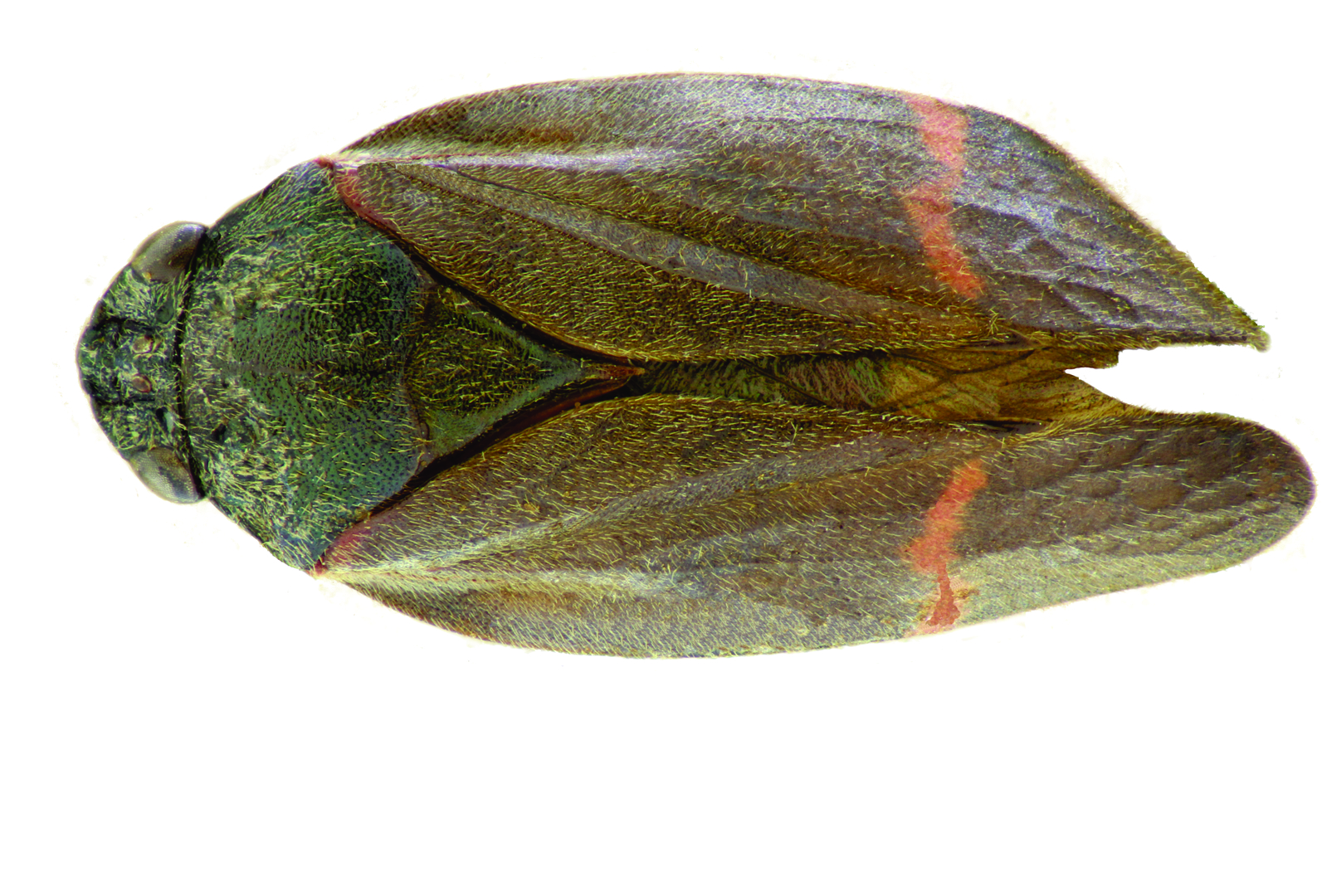
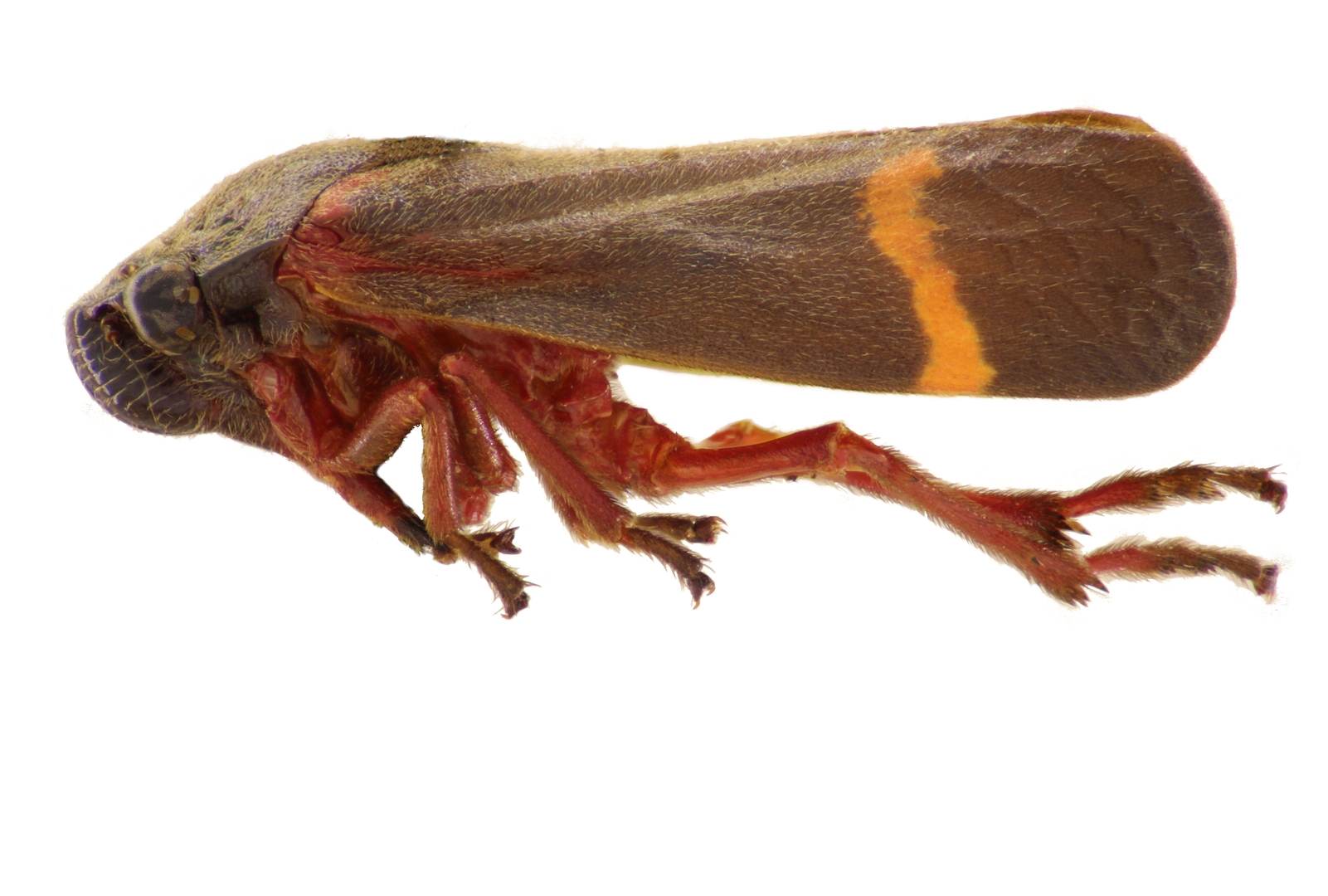
dorsal view
 Geographic distribution
Distribution
Insects with no economic damage registered
- Argentina
- Misiones
Other distribution
Brazil: Río Grande do Sul: Barao de Cotegipe; Santa Catarina: Brusque; Paraná: Curitiba, Foz do Iguazú, Campo Largo, Morretes, Tunas, Villa Velha, Castro; Río de Janeiro: Mangaratiba, S.M. Madalena, Muriqui, Corcovado, Duque de Caxias, Imbarie, S.A. Imbé; Espírito Santo: Santa Tereza, Vitória, Viana, S.J. Petrópolis, Sta. Leopoldina, Itarana; Minas Gerais: Passos, Araxá; Pará: Belém (Sakakibara 1979). Río de Janeiro, São Pablo, Minas Gerais, Amazonas; (Metcalf, 1961).
- Cercopis schach Fabricius, 1787
- Monecphora schach Goding, 1895
- Tomaspis schach Lallemand, 1912
- Tomaspis humeralis (Le Peletier de Saint-Fargeau & Serville, 1825)
Guagliumi (1969) highlighted D. (D.) schach, along with a complex of species, as the most important due to the damage it causes; in Bahia (Brazil), recorded between 10% to 100% losses in pastures, determining that spittlebugs are one of the most important pests in these crops, both due to the liquid they suck from the plants and the injection of saliva, which due to its toxicity produces the typical symptom called “pasture burning”.
Auad et al. (2006) detected, in Brazil, very high levels of infestation of this species on Brachiaria brizantha crops; In the same locality, in 2009, it was detected on Brachiaria decumbens.
Auad et al. (2006) detected, in Brazil, very high levels of infestation of this species on Brachiaria brizantha crops; In the same locality, in 2009, it was detected on Brachiaria decumbens.
Poaceae:
Axonopus compressus [Swartz] Beauv
A. scoparius (Flüggé) Kuhlm
Brachiaria dictyoneura Stapf
B. brizantha (A. Rich.) Stapf
B. humidicola (Rendle) Schweic
B. mutica (Forsk.) Stapf
B. radicans Napper
Cenchrus ciliaris L.
Chloris payana Kerguélen
Chrysopogon zizanioides (L.) Roberty
Cynodon dactylon (L.) Pers
C. plectostachyus (K. Schum.) Pilger
Digitaria eriantha Steudel
D. insularis (L.) Fedde
D. milanjiana (Rendle) Stapf
Hyparrhenia rufa (Ness) Staph
Melinis minutiflora Beauv
Panicum maximum (Jacq.) B.K. Simon & S.W.L. Jacobs
Paspalum notatum Flüggé
Tripsacum laxum Nash
Urochloa decumbens (Stapf) R. Webster
Zoyzia matrella (L.) Merr
Vitaceae:
Vitis vinifera L.
Axonopus compressus [Swartz] Beauv
A. scoparius (Flüggé) Kuhlm
Brachiaria dictyoneura Stapf
B. brizantha (A. Rich.) Stapf
B. humidicola (Rendle) Schweic
B. mutica (Forsk.) Stapf
B. radicans Napper
Cenchrus ciliaris L.
Chloris payana Kerguélen
Chrysopogon zizanioides (L.) Roberty
Cynodon dactylon (L.) Pers
C. plectostachyus (K. Schum.) Pilger
Digitaria eriantha Steudel
D. insularis (L.) Fedde
D. milanjiana (Rendle) Stapf
Hyparrhenia rufa (Ness) Staph
Melinis minutiflora Beauv
Panicum maximum (Jacq.) B.K. Simon & S.W.L. Jacobs
Paspalum notatum Flüggé
Tripsacum laxum Nash
Urochloa decumbens (Stapf) R. Webster
Zoyzia matrella (L.) Merr
Vitaceae:
Vitis vinifera L.
- METCALF Z.P. 1961. General Catalogue of the Homoptera. Fascicle VII. Cercopoidea, parte 2, Cercopidae. North Carolina State College, Raleigh (United States of America): 607 pp.
- GUAGLIUMI P. 1969. As cigarrinhas-das-pastagens (Homoptera: Cercopidae) e seus inimigos naturais no nordeste do Brasil. In: Reunião Anual da Sociedade Brasileira de Entomologia, 2. Recife. Sociedade Entomológica do Brasil: 89-90.
- SAKAKIBARA A.M. 1979. Sobre algumas espécies brasileiras de Deois Fennah, 1948 (Homoptera, Cercopidae). Revista Brasileira de Biologia, 39 (1): 9-30.
- AUAD A.M., SIMÕES A.D., DERESZ F., CASTRO M.M., SOUZA SOBRINHO F., PEREIRA A.V., BRAGA A.F., LEDO F.J.S. & PAULA-MORAES S.V. 2006. Flutuação populacional de Deois schach (Fabricius, 1787) em pastagem de Brachiaria brizantha. Reunião anual da Sociedade brasileira de Zootecnia, 43. João Pessoa. CD-ROM.
- FOIERI A. 2017. Taxonomía y Biología de los Cercopidae (Hemiptera) asociados a pasturas nativas y cultivadas del centro y norte de la Argentina, e identificación de sus enemigos naturales. Tesis doctoral FCNyM-UNLP, 278 pp.
- TOLOTTI A., DE AZEVEDO FILHO W.S., VALIATI V.H., CARVALHO G.S. & VALÉRIO J.R. 2018. Cigarrinhas-das-pastagens em gramíneas forrageiras no Brasil. Porto Alegre: Evangraf (51), 120pp.
