 Notozulia entreriana (Berg, 1879)
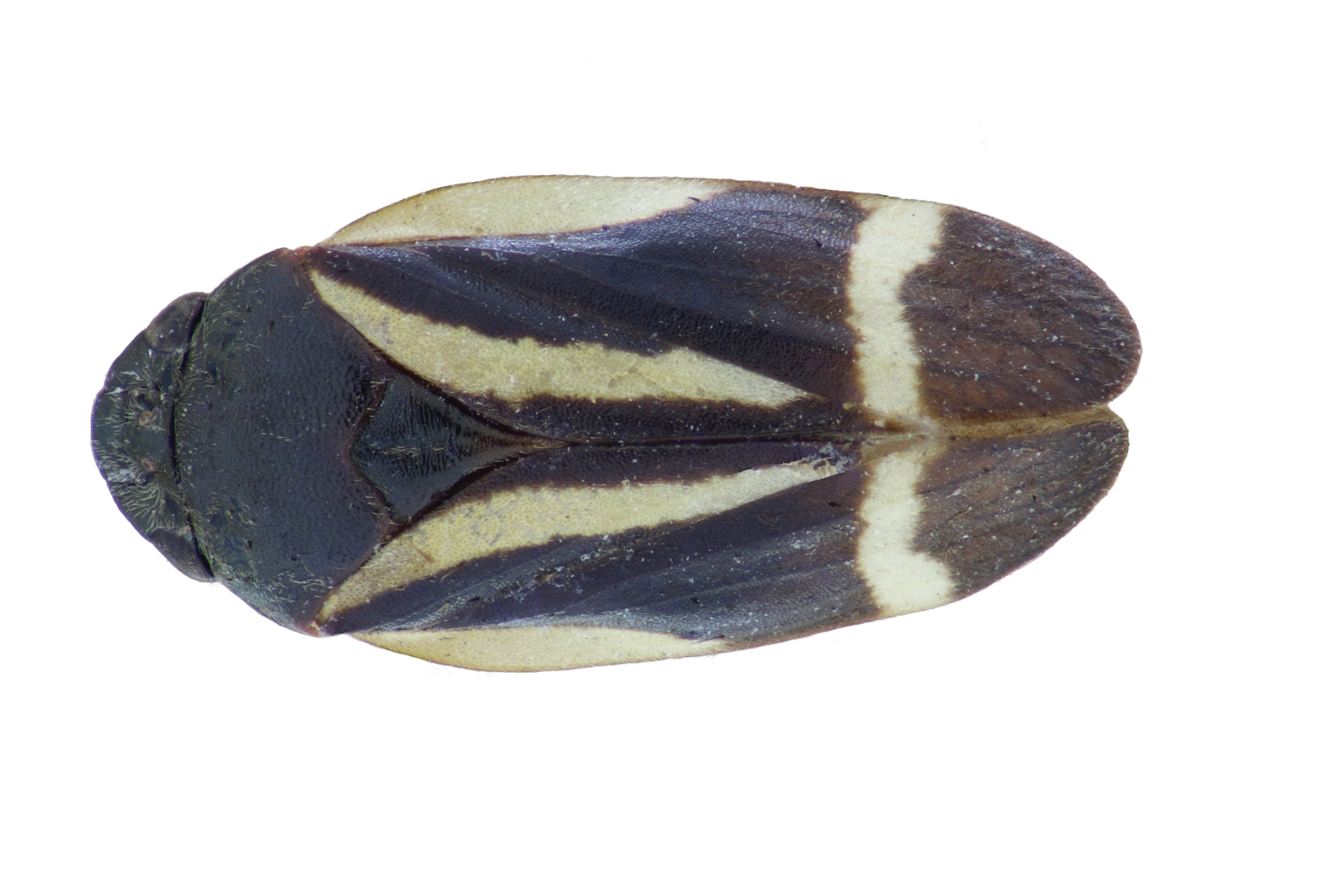
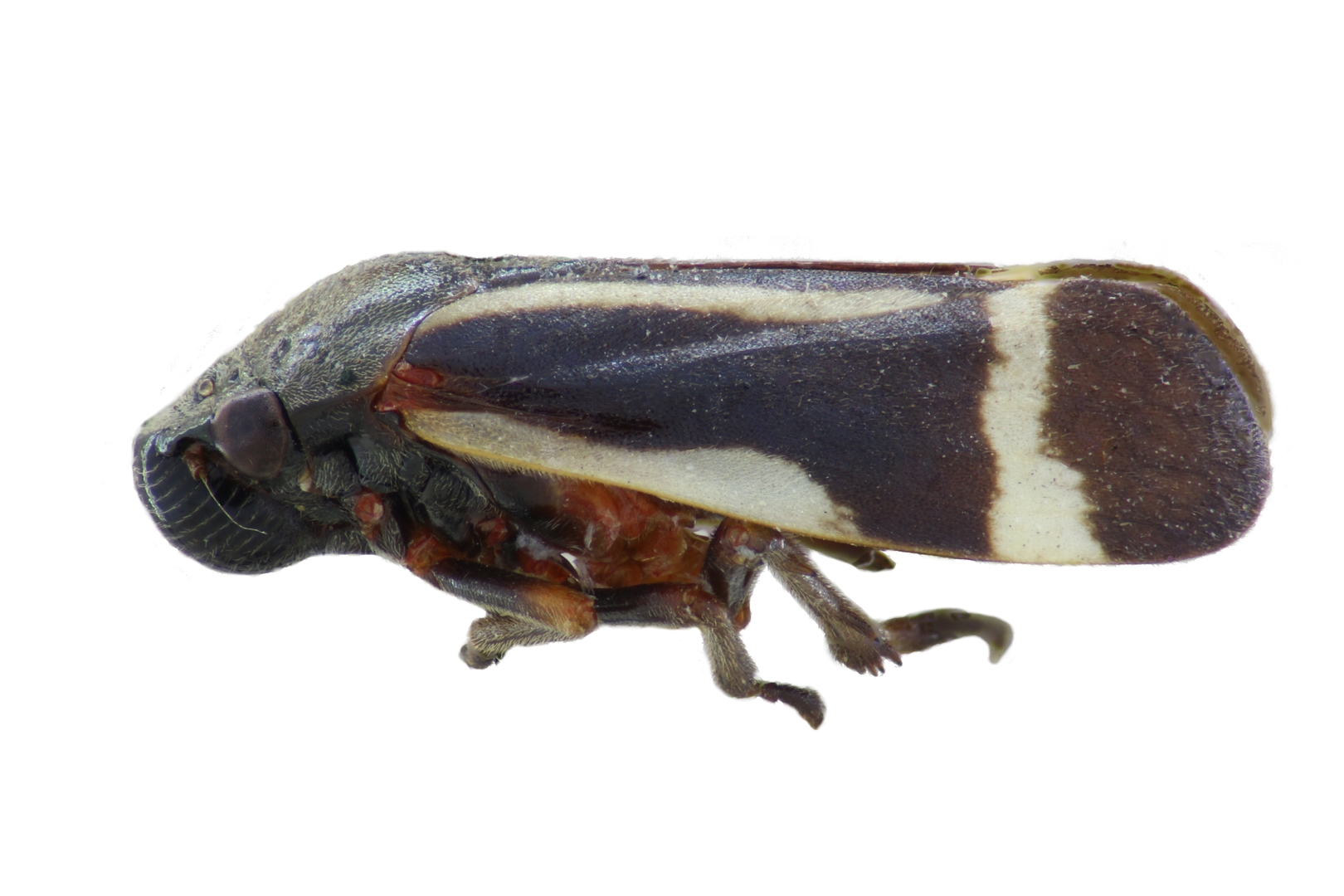
dorsal view
 Geographic distribution
Distribution
Insects with no economic damage registered
- Argentina
- Buenos Aires
- Catamarca
- Chaco
- Córdoba
- Corrientes
- Entre Ríos
- Formosa
- Jujuy
- La Pampa
- La Rioja
- Misiones
- Salta
- San Juan
- San Luis
- Santa Fe
- Santiago del Estero
- Tucumán
Other distribution
It is one of the species with the widest distribution in America, from the south of the USA to central Argentina; occurring in locations from 14 to 3634 meters above sea level. (Holmann & Peck 2002, Foieri et al. 2014). Colombia (Peck 2001), Brazil, Paraguay (Carvalho 1995), Bolivia (Foieri et al. 2015).
- Tomaspis entreriana Berg, 1879
- Tomaspis (Tomaspis) entreriana Lallemand, 1912: 93
- Monecphora entreriana Torres, 1946
- Zulia (Notozulia) entreriana Fennah, 1968
- Monecphora alboornata Lallemand, 1927
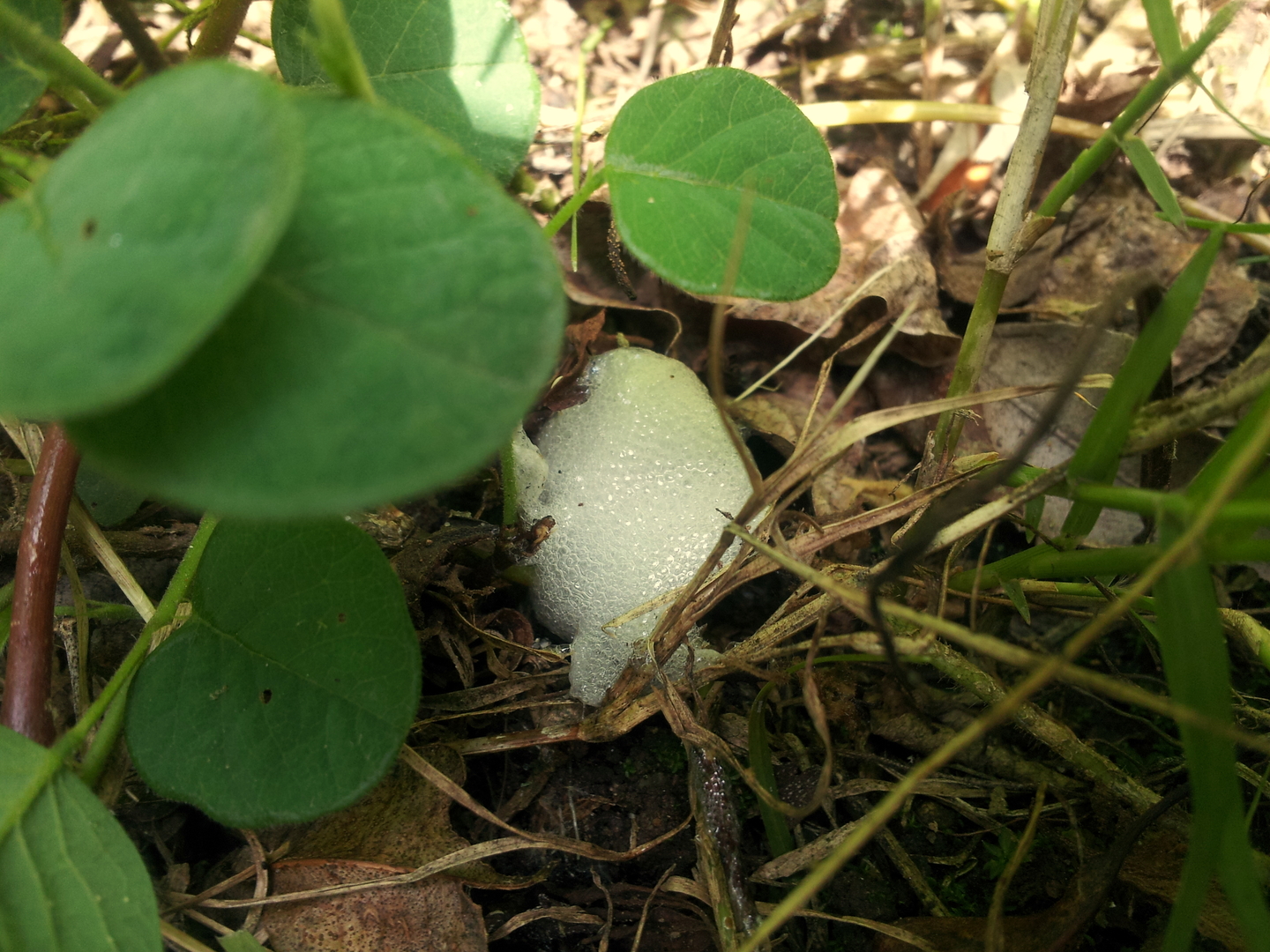
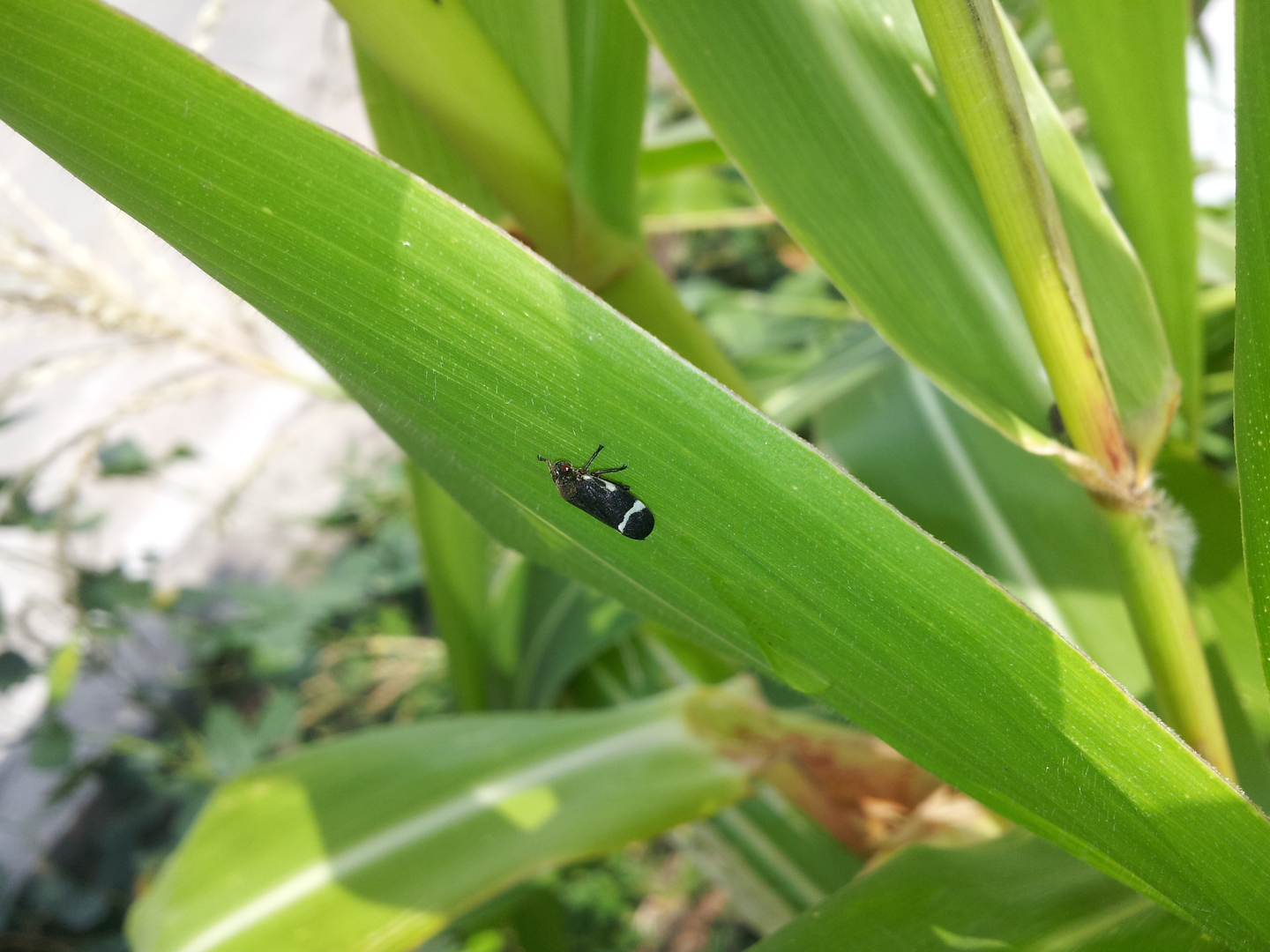
It is one of the most important pasture pests in several Brazilian states. Damaged caused by this insect reduces plant growth, lowering the stocking rates of the pastures. Although nymphal feeding may result in some damage, major damage, however, is caused by the adult spittlebugs. Toxic saliva injected during adult feeding interferes with photosynthetic activity, creating, at fi rst, chlorotic and then, necrotic lesions that spread longitudinally on the leaf (Paladini et al.2008)
Family Poaceae:
Axonopus compressus [Swartz] Beauv
Brachiaria mutica (Forsk.) Stapf
Cenchrus ciliaris L.
Cenchrus echinatus L
Chloris barbata Sw.
Chloris payana var. epica (Poir.) Kerguélen
Cynodon dactylon (L.) Pers
Digitaria ciliaris (Retz.) Koeler (Poaceae)
Digitaria decumbens Stent
Eleusine indica (L.) Gaertm
Eriochloa acuminata (J. Presl) Kunth
Leptochloa panicea subsp. brachiata (Retz) Ohwi
Panicum maximum (Jacq.) B.K. Simon & S.W.L. Jacobs
Paspalum notatum Flüggé
Saccharum officinarum L.
Sorghum halepense (L.) Pers
Sorghum vulgaris Pers.
Urochloa decumbens (Stapf) R. Webster
Urochloa fusca (Sw.) Hanson & Wnderlin
Urochloa plantaginea (Link) Weloster
Tripsacum laxum Nash
Zoysia matrella (L.) Merr.
Family Lamiaceae:
Melissa officinalis L.
Axonopus compressus [Swartz] Beauv
Brachiaria mutica (Forsk.) Stapf
Cenchrus ciliaris L.
Cenchrus echinatus L
Chloris barbata Sw.
Chloris payana var. epica (Poir.) Kerguélen
Cynodon dactylon (L.) Pers
Digitaria ciliaris (Retz.) Koeler (Poaceae)
Digitaria decumbens Stent
Eleusine indica (L.) Gaertm
Eriochloa acuminata (J. Presl) Kunth
Leptochloa panicea subsp. brachiata (Retz) Ohwi
Panicum maximum (Jacq.) B.K. Simon & S.W.L. Jacobs
Paspalum notatum Flüggé
Saccharum officinarum L.
Sorghum halepense (L.) Pers
Sorghum vulgaris Pers.
Urochloa decumbens (Stapf) R. Webster
Urochloa fusca (Sw.) Hanson & Wnderlin
Urochloa plantaginea (Link) Weloster
Tripsacum laxum Nash
Zoysia matrella (L.) Merr.
Family Lamiaceae:
Melissa officinalis L.
- CARVALHO G.S. 1995. Cercopídeos neotropicais: Redescrição de Notozulia Fennah, stat. n. (Auchenorrhyncha: Cercopidae). Analis da Sociedade Entomológica do Brasil, 24, 385-388
- PECK D.C. 2001. Diversidad y distribución geográfica del salivazo (Homoptera: Cercopidae) asociado con gramíneas en Colombia y Ecuador. Revista Colombiana de Entomología, 27, 129-136.
- HOLMANN F. & PECK D.C. 2002. Economic damage of grassland spittlebugs (Homoptera: Cercopidae) in Colombia: a first approximation of impact on animal production in Brachiaria decumbens. Neotropical Entomology, Londrina, 31, 275-284.
- FOIERI A., VIRLAE.G. & MARINO DE REMES LENICOV A.M. 2014. New host plants records for the froghopper Notozulia entreriana (Hemiptera: Cercopidae) with new data on its occurrence in diverse ecological zones in Argentina. Revista de la Sociedad Entomológica Argentina 74 (1-2), 79-84.
- FOIERI A. & MARINO DE REMES LENICOV A.M. 2015. Los ejemplares de Cercopoidea (Hemiptera: Auchenorrhyncha) depositados en la colección entomológica del Instituto Fundación Miguel Lillo, Tucumán, Argentina. Acta zoológica lilloana 59 (1-2), 57-70.
- FOIERI A., MARINO DE REMES LENICOV A.M.& VIRLAE.G. . 2016a. Descriptions of the immature stages and new host plant records of Notozulia entreriana (Berg) (Hemiptera: Cercopidae) pests of grasses in subtropical areas of the Americas. Zootaxa 4103 (1), 54-62.
- FOIERI A. 2017. Taxonomía y Biología de los Cercopidae (Hemiptera) asociados a pasturas nativas y cultivadas del centro y norte de la Argentina, e identificación de sus enemigos naturales. Tesis doctoral FCNyM-UNLP, 278 pp.
