Classification > Family
Ceratopogonidae
> Subfamily
Ceratopogoninae
> Tribe
Culicoidini
> Genus
Culicoides
> Subgenus
Culicoides (Cotocripus)
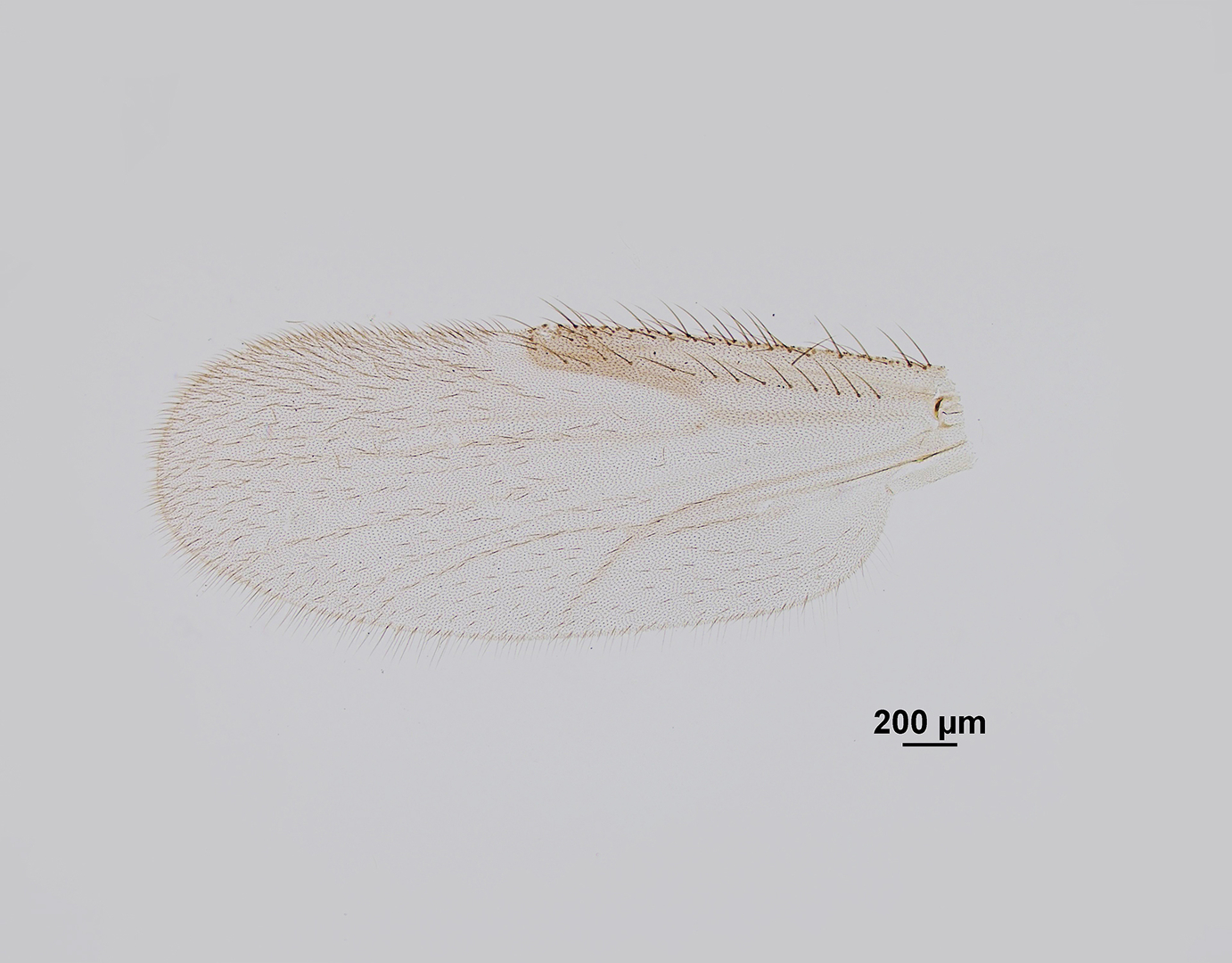
 Culicoides (Cotocripus) patagoniensis Ronderos & Spinelli, 1997

slide Holotype male and Allotype female




 Geographic distribution
Distribution
Record
- Argentina
- Chubut
- Neuquén
- Río Negro
- Santa Cruz
Other distribution
Chile
patagoniensis Ronderos & Spinelli, 1997: 34 (male, female). Type locality: Argentina, Chubut, lago Fontana, 44°52'46.69"S, 71°32'45.32"W. HT F (MLPA). Distr. Chile, Argentina (Neuquén: San Martín de los Andes, 40°9'39.65"S, 71°21'13.15"W; río Limay, anfiteatro, 41°0'49.85"S, 71°6'48.99"W. Río Negro: PN Nahuel Huapi, cerro Challhuaco, 41°15'30''S, 71°17'06''W, 1326 m meseta de Somuncura, Estancia La Rinconada, vertientes arroyo Comi Co, 41°08'35.1''S, 67°27'34.6''W, 1000 m. Chubut: type locality; arroyo Apeleg, 44°55'0.73"S, 70°9'1.74"W; northern shore lago La Plata, 44°52'S, 71°39'W; meseta de la Sierra Cuadrada, Estancia Don Eduardo, 44º39'25.9''S, 68º00'09.9''W. Santa Cruz: lago Buenos Aires, Paso Pallavicini, 46°16'38.33"S, 71°43'37.30"W, 600 m; valle del río Pinturas, 47º09'21.8''S, 70º39'31''W, 570 m. Tierra del Fuego: lago Yehuin, 54º21'39.6''S, 67º46'44.4'' W, 45 m). Refs.: Ronderos & Spinelli, 1997: 34; Ronderos & Spinelli, 2002: 94; Muzón et al., 2010: 113; Spinelli et al., 2010: 130.
NEW RECORDS:
Neuquén: lago Aluminé, 38°53'44.52"S, 71°5'7.15"W; PN Nahuel Huapi, isla Victoria, arroyo sin nombre, 40º53'26.3''S, 71º33'14.1''W, 780 m. Río Negro: PN Nahuel Huapi, cerro Challhuaco, 41°15'30''S, 71°17'06''W, 1326 m. Santa Cruz: meseta del lago Buenos Aires, Estancia La Frontera, 46°46'10.41"S, 71°45'26.96"W; PN Perito Moreno, lago Burmeister, 47°57'13.55"S, 72° 7'12.58"W.
ETYMOLOGY: specific epithet refers to an adjectival of the name of the distribution area in Patagonia.
DISCUSSION
The male of this new species differs from that of C. caridei by the edeago, ending concave (bifid in C. caridei as by the thin, sinuous paramers with distal bangs (robust, almost straight and without bangs in C. caridei). The most notable differences in females lie in the number and distribution of the coeloconic sensillae. Indeed, in addition to being different the antennal formula: 3, (7), 8-10, (1 1-12) 13-14, (15) in caridei, and 3.8, ( 9-10), (13), 14, (15) in partagoniensis the spermatheques of this new species present show noticeable necks compared to the poorly developed of C. caridei.
- RONDEROS, M. M. & G. R. SPINELLI. 1997. Culicoides patagoniensis, n. sp. del Sur de la Argentina y Chile (Diptera: Ceratopogonidae). Gayana, Chile. 61(1): 33-39. ISSN: 0016-531X.:33-39.
- RONDEROS, M. M. & G. R. SPINELLI. 2002. Los Culicoides de la Argentina: Clave de especies y nuevos registros (Diptera: Ceratopogonidae). En: D. Salomón (Comp.). Actualizaciones en Artropodología Sanitaria Argentina. Serie Enfermedades Transmisibles, Pub. Monogr. Nº 2. Fundación Mundo Sano, Buenos Aires, pp 89-95.:94.
- MUZÓN J., G. R. SPINELLI, G. C. ROSSI, P. I. MARINO, F. DÍAZ & M. C. MELO. 2010. Nuevas citas de insectos acuáticos para la Meseta de Somuncurá, Patagonia, Argentina. Revista de la Sociedad Entomológica Argentina. 69: 111–116.
- SPINELLI, G. R., P. I. MARINO & A. L. GADDI. 2010. New records of biting midges from Argentina and Chile (Diptera: Ceratopogonidae). Revista de la Sociedad Entomológica Argentina 69(1-2): 127-132.:130.
